Let's start with what you're probably experiencing
You started an SSRI. Your mood stabilized. Your anxiety lifted. And then something else happened: sensation became muted, orgasms got harder or impossible, and the whole experience of pleasure started feeling like you were trying to feel something through a thick pane of glass. If that's you, you're not alone. Sexual side effects affect 40-60% of people taking SSRIs, and they're the second most common reason people stop taking them (after initial side effects like nausea).
Here's the thing though. The problem isn't the medication itself. It's that most people don't know the mechanism, so they assume it's permanent, they blame their partner, or they white-knuckle through it. None of that works. Once you understand what SSRIs actually do to sexual response, you can work with it instead of against it.
I work with couples regularly where one partner is on an SSRI, and the sexual frustration becomes relationship friction. The medication saved their mental health, and the flatness feels like a punishment for getting better. It doesn't have to stay that way.
What SSRIs actually do to arousal and sensation
SSRIs work by increasing serotonin availability in your brain. That's great for mood and anxiety. But here's the catch: serotonin also influences dopamine and norepinephrine, both of which fire during sexual arousal and orgasm.
When serotonin goes up, dopamine and norepinephrine can get inhibited. That translates to three specific changes in the body.
First, the nervous system takes longer to shift into the parasympathetic (arousal) state. You might find you need way more time to get turned on, or that you don't feel "turned on" in the way you used to, even though your mind wants sex. Second, genital blood flow decreases slightly, which means less engorge and less of that full, sensitive feeling. Third, the orgasmic reflex itself gets suppressed. Your body simply doesn't fire the same way.
The weird part is that desire often stays intact. You want sex. You just feel like you're wanting it through cotton wool.
Why standard solutions fail (and what actually works)
Most doctors say one of three things: "It'll get better with time" (sometimes true, often not), "Switch medications" (valid option, but not everyone tolerates alternatives), or "Just use more stimulation" (half-right, but vague).
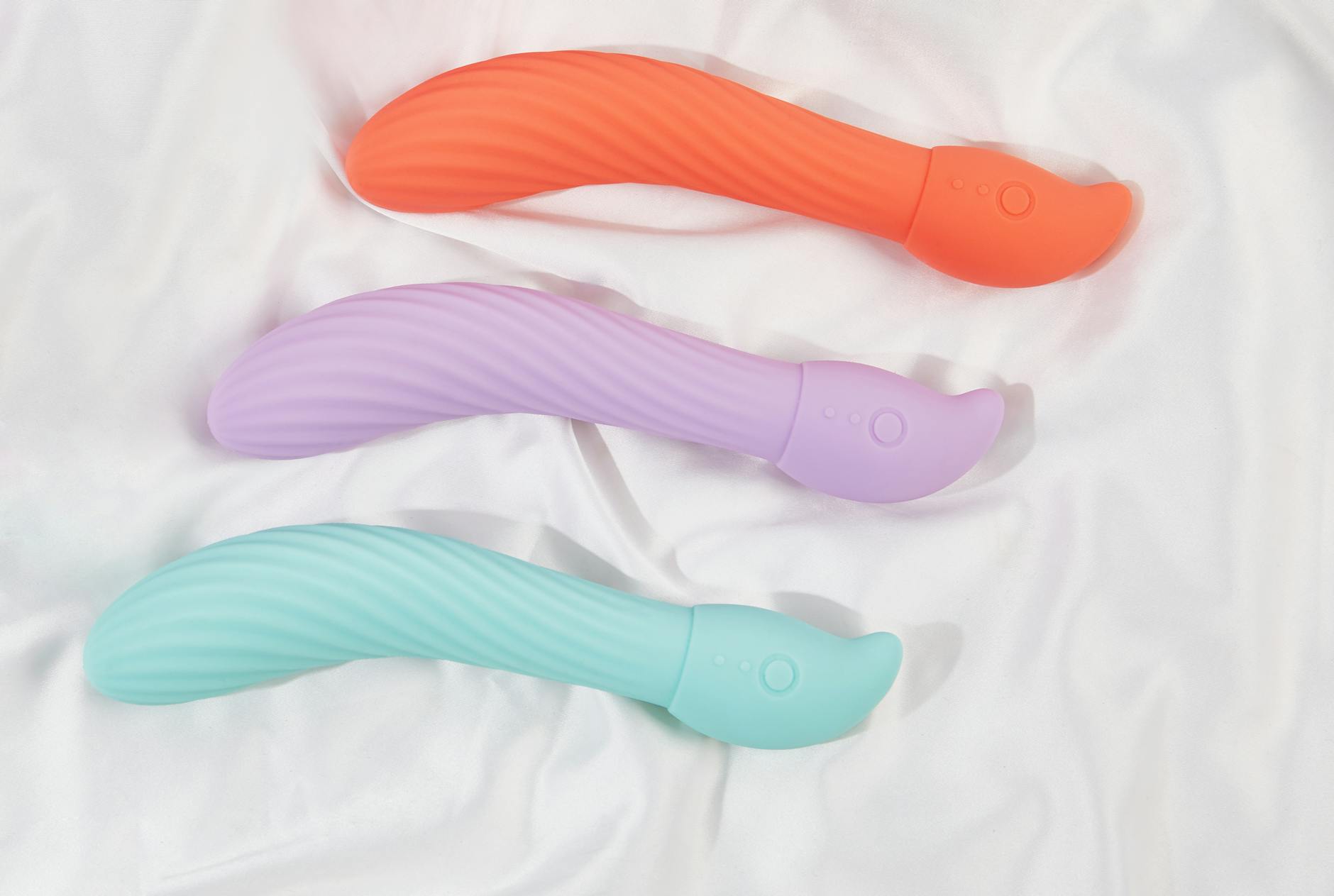
Here's what actually works. You need a tool that bypasses the reduced sensitivity by introducing stimulus that's intense enough to break through the dampening effect. That's where lemon clitoral vibrators come in.
Unlike traditional vibrators that rely on steady oscillation, lemon vibrators use suction technology. They create a gentle pulse that stimulates thousands of nerve endings simultaneously without requiring the kind of direct contact or friction that might feel numb or even uncomfortable when sensation is suppressed. It's a different signal to the nervous system entirely.
Research on suction-based stimulation shows it activates different neural pathways than vibration. For people on SSRIs whose dopamine-dependent pleasure response is suppressed, activating a different pathway sometimes bypasses the flattening.
I'm not saying lemon vibrators are a cure. But for many clients taking SSRIs, they're the difference between orgasm-rarely or orgasm-never and getting sensation back.
Three specific ways SSRI-dulled pleasure responds to lemon suction design
The sensation is different enough to register. When everything feels muted, introducing a stimulus your nervous system hasn't adapted to sometimes breaks through the threshold. The pulsing suction of a lemon vibrator feels qualitatively different from vibration, which can restore the novelty your nervous system needs to fire.
The intensity is controllable but concentrated. Most lemon clitoral vibrators come with multiple intensity settings. You can start low and build, which matters because SSRI-dampened sensation often needs a gentle ramp. You're not trying to force an orgasm. You're rebuilding the pathway incrementally. That's actually how the nervous system responds best.
The pacing doesn't require active effort. When sensation is flat, performance anxiety becomes worse because you can feel yourself not feeling things. A lemon suction vibrator handles the work. You just have to stay present. That distinction reduces the cortisol spike that actively blocks pleasure.
Timing, patience, and the pelvic floor piece
Here's what I tell clients: when you're on an SSRI and sensation is suppressed, you're not broken. You're working with a different set of wiring. That doesn't mean slower is better. Sometimes it means different.
Start with 10-15 minutes of warm-up before using any device. Your body needs time to shift states, even if it doesn't feel like it's shifting. Then, spend 5-10 minutes on the lowest intensity setting, even if it feels like nothing is happening. That's not wasted time. That's your nervous system re-learning the pathway.
One thing most people miss: the pelvic floor tightens under stress and when arousal is dampened. Check in with yourself before using a lemon vibrator. Can you actually relax your pelvic floor, or is it braced? If it's braced, no device will work because the muscles are actively blocking sensation. A few slow breaths, maybe some gentle stretching, and then try again. That pelvic floor release is sometimes 70% of the work.
Also, patience matters more here than it does in other contexts. Pleasure pathways rebuild slowly. If you use a lemon vibrator once and expect instant results, you'll be disappointed. But if you commit to it 3-4 times a week for 2-3 weeks, most people notice a shift.
Conversations with your prescriber that actually help
I'm not a doctor, but I work with enough couples to know what conversations actually move the needle. Don't say "The SSRI killed my sex drive." Say "Sexual response feels muted and I'd like to explore whether adjusting timing, dose, or medication might help."
There are options. Some people respond well to adding bupropion (Wellbutrin), which boosts dopamine. Others do better on SSRIs that have a slightly lower sexual side effect profile, like sertraline. Some people shift the timing of the dose to take it at night rather than morning, which can reduce the acute dampening during the day. None of these are guaranteed, but they're concrete things your prescriber might try.
Also ask whether staying on the SSRI is non-negotiable for you right now, or whether you have flexibility. That conversation changes the options. If the medication is essential for your mental health (it often is), then the work is adaptation and using tools like a lemon clitoral vibrator. If you have some flexibility, there might be alternatives.
The worst thing you can do is silently suffer and assume it's permanent.
What to expect over time
Most people see shifts in 3-6 weeks with consistent use of suction-based lemon vibrators and the practices above. Some regain full sensation. Others find a new normal that's 80% of baseline. Some remain in the 60% range but feel satisfied because they've reclaimed agency.
What's important is that sensation is usually the first thing to return, and orgasm capacity follows. Don't wait for orgasm to feel satisfied. If you're noticing more sensation, that's already a win.
Also know that this often improves with time on the medication. Around 6-12 months, some people find sensation naturally creeps back even without active work. It's not universal, but it happens often enough that you might notice gradual improvement even if you stay exactly where you are now.
Your pleasure matters. The fact that you're on an SSRI means you prioritized your mental health. That's right. Now you get to rebuild pleasure without guilt or shame. That's the other part.
Common questions about SSRIs, vibrators, and sensation
Can I use a lemon vibrator if I'm on other medications too? Most psychiatric medications have similar effects on sensation. If you're on an SSRI plus an anti-anxiety medication or antipsychotic, the dampening is usually cumulative. Suction-based lemon vibrators are still worth trying, and the same patience principle applies. Talk to your prescriber if you're on multiple medications and experiencing flattened pleasure.
Will using a lemon vibrator make the SSRI side effects worse? No. Vibrators don't interact with SSRIs. What sometimes happens is that if you push too hard too soon, you reinforce the "I can't feel this" narrative. That's why the gentle, patient approach matters. You're not forcing. You're inviting.
How do I know if it's the SSRI or something else killing my pleasure? SSRIs are the most common pharmacological cause of sexual side effects, but not the only one. Other meds that commonly affect pleasure include antipsychotics, anticonvulsants, and some blood pressure medications. If pleasure flattened right around when you started the medication, it's probably the medication. If it was already struggling, the SSRI might be making it worse, but it's not the only factor. Either way, a device that bypasses reduced sensation still helps.
Do I need a prescription for a lemon clitoral vibrator? No. Lemon vibrators are consumer devices, not medical equipment. You can buy them online. If you're unsure what might work for your specific situation, the Hello Nancy team can help you figure out which lemon vibrator design suits you.
What if I use a lemon vibrator and still can't orgasm? That's information too. It tells you either the suppression is very significant (which might warrant a conversation with your prescriber about alternatives) or there's something else happening (anxiety, relationship dynamics, medication interactions). If you've given it 4-6 weeks of consistent, patient use and nothing's shifting, that's worth bringing to your provider.
Can my partner help with this? Yes. Often the best thing a partner can do is remove pressure. "No pressure, no timeline, just exploring" shifts the nervous system from stress to curiosity. If your partner can be present without expecting a specific outcome, that actually makes sensation return faster. That's not mystical. That's neuroscience.
The path forward
SSRIs are one of the most effective treatments we have for anxiety and depression. The sexual side effects are real, frustrating, and nobody warns you clearly enough beforehand. But they're also solvable in most cases. It's not about white-knuckling or just living with it. It's about understanding the mechanism, picking the right tool, and giving your nervous system time to rebuild.
A lemon suction vibrator is one piece. Patience is another. Honest conversation with your prescriber is the third. Together, those three things move most people from "pleasure feels impossible" to "pleasure is back" or at least "pleasure is present and good enough."
You deserve to feel good. The medication that saved your mental health doesn't get to take that from you permanently. If you want to explore whether a lemon vibrator or other Hello Nancy products might help, let's talk.