
Here's what nobody tells you about solo pleasure in a relationship
You bought a Lem vibrator. It's gorgeous, it arrived discreetly, and you're genuinely excited. Then your partner asks what's in the box. You tell them. They smile and say something like, "Oh, we could use that together." And suddenly the thing you were about to do alone feels like a negotiation.
This is one of the most common relationship friction points I hear about. It looks like a sex problem. It's actually a boundaries problem dressed up as a sex problem. And the solution is not complicated, though it does require you to say some things that feel awkward the first time.
Why your partner might assume solo pleasure means they're invited
Think about it from their angle for a second. Sex is usually something you do together. If you're bringing a toy into the picture, their brain might jump to "this is a new couple activity." That's not weird. That's actually their brain doing what it's trained to do.
But here's the thing: solo pleasure isn't a couple activity. It's a personal one. A clitoral vibrator like the Lem gives you access to orgasms that have nothing to do with partnered sex. They're faster, more intense, more controllable, and completely yours. That's the whole point.
The disconnect is real. Your partner isn't bad for assuming. You're not selfish for wanting privacy. You're both just operating from different frameworks.
The conversation you need to have
Don't have it in the bedroom. Have it somewhere neutral, when there's no sexual pressure on either side. Maybe over coffee. Maybe while you're washing dishes. Somewhere that feels like a normal conversation, not a "relationship talk."
Your opening might sound something like this: "I got this vibrator because I want to explore what feels good for me on my own. It's not about you or about our sex life. It's about knowing my own body better. I'll definitely want to use toys together sometimes, but I also need the space to just... figure myself out. That cool?"
Notice what that does: it acknowledges them (by mentioning toys together), it sets a clear boundary (solo time is solo), and it explains the "why" (self-knowledge, not rejection). Most partners will get it immediately. Some will need a follow-up.
If they push back, the pushback usually sounds like one of these:
"Can I just watch?" or "Does that mean you don't want me in your sex life?" or "I feel left out."
Each one deserves a real answer. "Watching isn't the same as it being solo for me, and I need that solo part." Or "No, it means I want both. Solo time and us time. They're different things." Or "I get that. That's about us, though, not about this toy. Let's figure out what we both want together."
The practical boundaries that actually work
Being clear about solo time means being specific. You're not just saying "I need alone time." You're creating a repeatable structure your partner can understand.
Here's what that might look like: a specific time or day (Tuesday nights, Sunday mornings, whatever works for your life), a clear duration (20 minutes, an hour, whatever you need), and a simple signal that means you've got that time blocked. Some people use a specific text. Some literally shut the bedroom door and that means solo time. Some say it out loud: "I'm going to take 30 minutes for myself tonight."
That predictability matters. Your partner isn't wondering if they're being excluded or if something's wrong. They know Tuesday nights are yours. That actually makes them more secure, not less.
When they want toys to be a shared thing
This is worth supporting, by the way. Using a clitoral vibrator with your partner, having them control it or watch you use it, is genuinely hot. And it's completely different from solo play. One is about you knowing yourself. The other is about sharing that knowledge.
You can have both. Schedule them separately. Your solo time is your solo time. Your partnered toy time is different, with different communication and a different dynamic. That's not confusing. That's actually ideal.
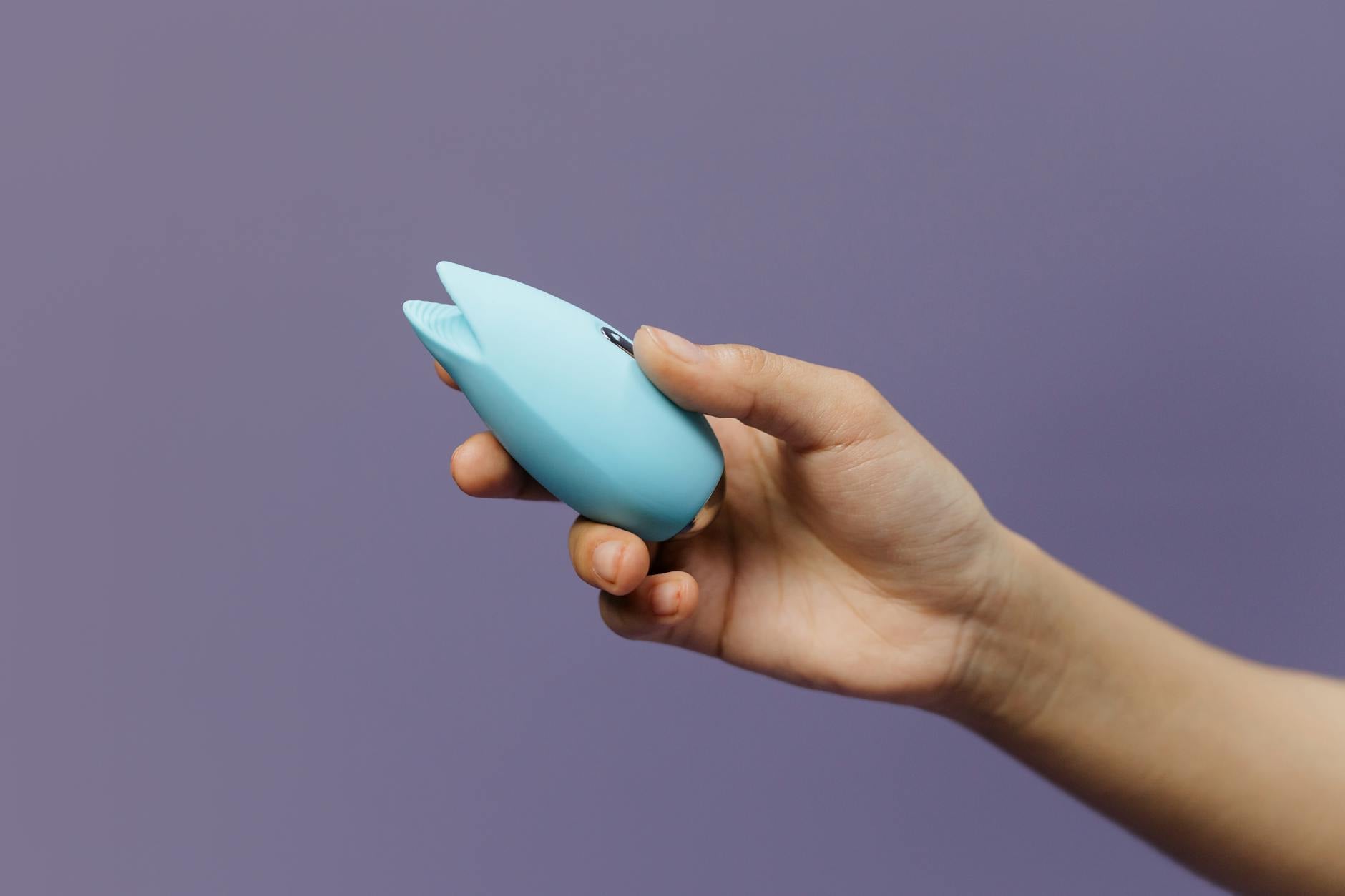
Photo by cottonbro studio on Pexels
Why solo time actually strengthens your relationship
I say this as a therapist: the couples who have the best sex lives are the ones who have strong senses of individual sexuality. They know what they like. They're comfortable asking for it. They don't need their partner to figure out their pleasure for them.
When you take an hour to use your Lem vibrator alone, you're not taking something away from your relationship. You're building the knowledge and confidence that makes your partnered sex better. You're less resentful because you're getting what you actually need. You're less performance-focused because you've already had an orgasm that was just for you.
That's not selfish. That's investing in your partnership.
The guilt thing (which is real and worth addressing)
Many people feel guilty about solo pleasure when they're in a relationship. Like they're supposed to only want sex with their partner, and wanting solo time means something's wrong. This is a cultural belief that does tremendous damage.
Your sexuality isn't a finite resource. Using a clitoral vibrator alone doesn't mean you want your partner less. It means you want yourself too. That's not a zero-sum game.
If you're feeling genuinely guilty, ask yourself where it's coming from. Is it something your partner said? Something you were taught growing up? Something else entirely? Because that's the thing that actually needs the conversation, not the vibrator.
When your partner has a harder time with this
Some partners struggle with solo pleasure because they're insecure. They worry it means you're not attracted to them, or that you're imagining someone else, or that you'll eventually not want them at all. Those worries are real and worth taking seriously.
The fix isn't to give up your solo time. The fix is reassurance plus data. Tell them explicitly: "I love having sex with you. I also want to know my own body. Both things are true at the same time." And then prove it by maintaining a solid partnered sex life. Show them that solo pleasure isn't replacing partnership. It's coexisting.
If they're having real anxiety about it, couples therapy is worth considering. A third party can help separate insecurity from actual relationship problems. Often, there isn't a problem. Just old programming that needs updating.
The practical setup with a Lem vibrator
Since we're talking about lemon clitoral vibrators specifically, a few logistics. The Lem is quiet enough that you can use it during your solo time without that being the main event. It's fast and efficient. Most people get exactly what they need in 15 to 25 minutes.
Build that time into your actual schedule, same way you'd schedule anything else that matters to you. Your pleasure matters. Treat it like it does.
Rebuilding intimacy after the awkwardness
If you've already had the awkward conversation and your partner's still not thrilled, you have options. You can invite them into partnered toy play, showing them it's not a replacement, it's an addition. You can emphasize the parts of partnered sex you love. You can ask what they're actually worried about and address that specifically.
Most importantly, you can hold the boundary while being kind. "I love you and I also need this" is not a contradiction. It's actually the healthiest thing you can say.
FAQ
Can I use a lemon clitoral vibrator if my partner feels threatened by it?
Yes. Your pleasure is not contingent on your partner's comfort level with your body. That said, understanding what's actually threatening them might help. Are they worried about being replaced? About your sexuality existing outside the relationship? About performance anxiety? Each worry has a different answer. Address the actual worry, not the toy.
Is solo pleasure with a Lem vibrator cheating?
No. Cheating involves deception or violation of boundaries. If you and your partner have agreed you're allowed solo time, and you take it, that's not cheating. If you haven't discussed it and you're hiding it, that's a different problem. But the vibrator itself isn't the issue. The honesty is.
How often should I use my vibrator solo?
As often as you want. There's no quota. Some people use it once a month. Some people use it multiple times a week. The only "right" frequency is whatever feels good to you and doesn't interfere with your partnered sex life (and honestly, it usually helps rather than hurts).
What if my partner wants to use my Lem vibrator with me and I don't want to share?
Then don't share it. You can set a boundary around that too. "This one is mine solo. If you want to use toys together, let's find something we pick out as a couple toy." It's your body and your toy. You get to decide how it's used.
How do I explain solo pleasure to my partner without making them feel replaced?
Be specific about what you're doing and why. "I want an orgasm that's just for me, where I can focus only on what feels good" is very different from "I want an orgasm that proves I don't need you." One is about self-knowledge. The other is about rejection. Name the real thing you're actually doing.
Can we use a Lem vibrator together if my partner was uncomfortable at first?
Absolutely. In fact, once your partner sees what a lemon clitoral vibrator actually does and how it makes you feel, they often want in. That's a great moment to talk about partnered toy play being a different thing than solo time. You get both. Everyone wins.
The real goal here
This isn't about protecting your solo time from your partner. It's about building a sexual life where you both get what you need. That means solo pleasure when you need it, partnered pleasure when you want it, and enough communication that nobody's left guessing.
A Lem vibrator is a tool for knowing yourself. Your partner benefits from that self-knowledge, whether they're in the room or not. Frame it that way. Usually, everything gets easier.
Ready to have the conversation? Start simple. Start kind. And remember: you deserve pleasure that's just yours.