
Let's start with the frustration
You used to get there faster. A few minutes of the right touch, and your body would meet you halfway. Now it takes fifteen. Sometimes twenty. And the worst part isn't the time itself. It's the wondering if something's actually broken, or if you're just not into it anymore.
Here's the thing: neither of those stories is true. What's happening is biological, real, and completely fixable with the right tools and expectations.
Why arousal slows down after hormonal shifts
When your hormones change.whether through birth control switches, hormonal IUDs, perimenopause, or other medications.several things happen to blood flow, tissue sensitivity, and your nervous system's response speed.
Estrogen helps maintain vaginal blood flow and tissue elasticity. When it dips, blood reaches the clitoris more slowly. Testosterone, which you produce even if you have ovaries, directly fuels desire and arousal speed. Lower testosterone means the neural ignition takes longer to catch.
Then there's the psychological layer. If you've spent weeks or months noticing the slowdown, you've probably developed some performance anxiety about it. Your brain starts the arousal process while simultaneously checking in: "Is it happening yet?" That self-monitoring itself dampens the response.
Add in stress, medication side effects, or relationship tension, and arousal becomes genuinely sluggish. But.and this matters.the capacity for sensation and orgasm is still completely there. The pathway just needs a different entry point.
How lemon vibrators solve the timing problem
Unlike hands or fingers, which rely on consistent manual pressure and your partner's endurance, lemon clitoral vibrators like the Lem work through sustained, rhythmic stimulation that doesn't fatigue and doesn't depend on you "cooperating" fast enough.
Here's the practical difference: when arousal is slow, you need consistent input over time. Your body needs steady, predictable sensation to build toward response. A vibrator delivers that. It doesn't speed up if you're taking longer. It doesn't get tired or distracted. It just keeps working while your nervous system catches up.
The Lem's suction-based design is particularly useful here because it stimulates through gentle pressure and release rather than direct friction. This means you can start at lower intensities (patterns 1 through 3) for longer warm-up periods without the risk of desensitization that comes with higher vibration speeds too early.
You're not rushing toward a quick finish. You're using a tool that meets your actual timeline.
Building a realistic warm-up routine
First, forget the five-minute window. Give yourself 20 to 30 minutes from start to finish. This isn't a luxury or an indulgence. It's accounting for your body's actual speed right now.
Start with something non-genital. A bath, a back massage, your partner's hands on your neck or inner thighs. Let arousal begin somewhere other than the destination. This primes your nervous system without putting pressure on a specific body part to "perform."
Move to the Lem after 10 to 15 minutes. Start with pattern 1 or 2. You're not looking for intense sensation yet. You're looking for consistency and the beginning of blood flow. Spend 5 to 10 minutes here, even if nothing feels particularly strong.
Then shift to pattern 3 or 4 as sensation builds. Most people find that after this steady buildup, arousal accelerates naturally. Your body starts to recognize what's happening and responds faster once the pathway is already warming up.
This isn't procrastination. It's working with your physiology instead of against it.
Solo exploration versus partnered sex
When you're learning your new arousal timeline, solo time with a lemon vibrator is genuinely useful. You're not managing anyone else's experience or pace. You're just learning what you need.
Solo exploration also removes the performance pressure that often slows arousal even more. When it's just you and your body, you can spend 30 minutes on sensation without feeling like you're holding your partner up. That alone often speeds things up because you've removed the mental brake.
If you're partnered, this is also a conversation starter. "I've noticed my body's timing has shifted. I want us to plan more time together, and I'm going to use the Lem to help my body warm up faster." Most partners appreciate both the honesty and the solution. It's collaborative, not a problem you're bringing to them.
The role of lubrication in slower arousal
When arousal builds slowly, natural lubrication often does too. This is where many people make a mistake: they assume they need more lube because something's wrong, when really they just need to wait longer for their body's own response.
But here's the nuance: if you're using a lemon clitoral vibrator for 20 to 30 minutes, your tissues benefit from external lubrication even if your body's producing some. Water-based lube reduces friction and makes the sensation smoother, which actually helps arousal build faster because your nervous system isn't managing discomfort at the same time.
Use a small amount of quality water-based lubricant. You're not compensating for dysfunction. You're optimizing for the timeline your body actually has right now.
When slower arousal is actually good news
Here's what I tell clients: slower arousal often means deeper arousal once it arrives.
When your body takes time to build, the orgasm tends to be more integrated. You're more present. Your nervous system has time to activate across your whole body, not just genitally. People often report that their most satisfying orgasms come when arousal wasn't fast but was steady.
This reframe matters psychologically. You're not fighting a deficit. You're accessing a different quality of sensation that many people spend years trying to find. The fact that your timeline changed might actually be an invitation to something richer.
Communication if you're with a partner
Partners often interpret slower arousal as lower desire. "They're not into it anymore." That story can poison everything else.
The conversation to have is specific: "My body's responding on a different timeline now. That doesn't mean I want you less. It means I want us to plan differently. Can we set aside more time? Can we start earlier in the evening? Can I use the Lem while you're involved in a way that works for both of us?"
This is not a therapy session. It's a logistics conversation. You're asking for time and consistency, not emotional reassurance. When partners understand it's a timing issue, not an interest issue, most respond well.
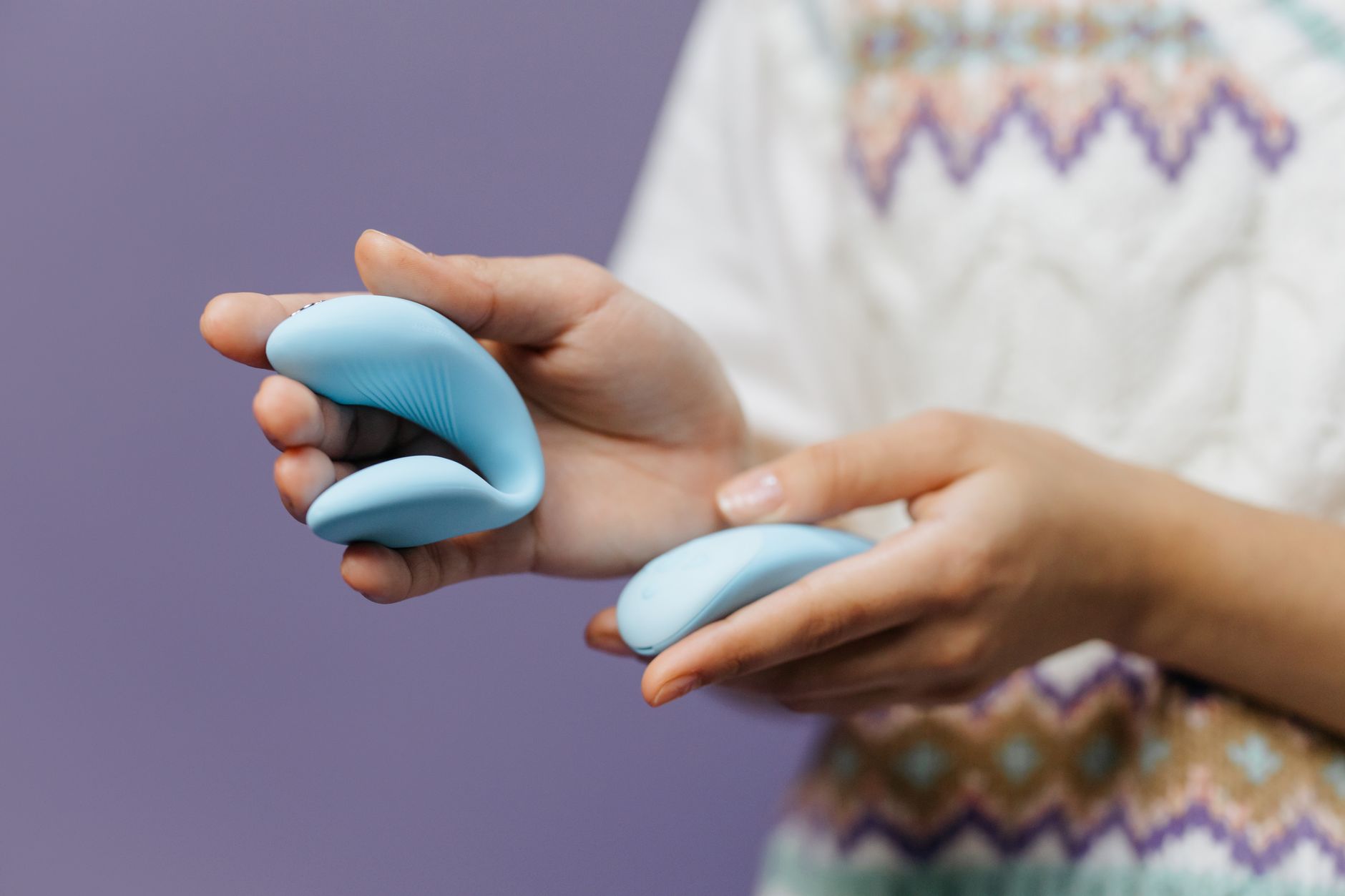
Photo by cottonbro studio on Pexels
Practical patterns and intensities for extended warm-up
The Lem has multiple intensity settings for a reason. Use them strategically.
Pattern 1 or 2 for the first 10 to 15 minutes. You're establishing baseline stimulation. Think of it as waking up the nerve endings.
Pattern 3 for the middle phase (5 to 10 minutes). This is where arousal usually starts to noticeably build. You might feel more sensation or begin to notice changes in breathing or heart rate.
Pattern 4 or higher for the final phase. By now, your body's momentum is already going. Higher intensity now feels different than it would have felt at the beginning. It builds rather than shocks.
Some people find they never need to go above pattern 3. That's fine. You're not looking for the highest number. You're looking for the pattern that lets arousal build consistently.
Hormonal changes and what's actually changeable
If you're on hormonal birth control, some formulations slow arousal more than others. If you've been on the same one for years and noticed a shift, that's worth discussing with your prescriber. Sometimes switching the dose or the type makes a real difference.
If you're entering perimenopause or menopause, topical estrogen treatments are worth knowing about. They're localized, they work quickly, and they can restore blood flow and tissue response in ways that make arousal faster again. This isn't optional. It's medicine. Many women don't know it's available.
If you're on antidepressants or other medications affecting desire, this is also a conversation for your doctor. There are sometimes alternatives or dosing adjustments that help without losing the benefit of the medication itself.
Sometimes slower arousal is just your body's new normal, and that's okay. Sometimes it's a signal that something else needs adjusting. The difference is usually found by asking.
Why lemon clitoral vibrators specifically help here
Not all vibrators are designed the same way. Traditional bullet vibrators or wand vibrators deliver intensity quickly, which can feel overwhelming if your body's trying to ease into arousal.
Lemon sexual toys using suction technology offer graduated, gentle pressure that doesn't jar your nervous system. You can literally feel your body responding in real time because the sensation is precise enough to track. This precision also means you're not fighting against numb spots. You're working with what's actually sensitive right now.
The difference sounds subtle until you use one. Suddenly 20 minutes of buildup feels natural instead of frustrating. You're not white-knuckling your way to arousal. You're being guided there by a tool that matches your pace.
One final reframe
Slower arousal isn't a problem to solve as fast as possible. It's information about what your body needs right now. Often what it needs is time, consistency, and a tool designed to provide both without exhaustion or frustration.
The Lem is that tool. Combined with realistic timelines, communication, and patience with yourself, it transforms slower arousal from a source of anxiety into something completely workable. And sometimes into something better.
People also ask
How long should I wait before using a lemon vibrator if arousal feels slow?
There's no rule, but I recommend starting with 10 to 15 minutes of non-genital touch or arousal building first. This primes your nervous system. Then introduce the vibrator at a lower intensity pattern. You're not replacing foreplay. You're extending it with a tool that maintains consistent stimulation.
Does using a lemon clitoral vibrator make natural arousal slower over time?
No. This is a common worry but not supported by evidence. Using a vibrator doesn't rewire your nervous system into needing more intensity. It's more like using reading glasses. You're not making your eyes worse. You're accommodating the timeline your body actually has.
Can hormonal birth control be adjusted if it's making arousal slower?
Yes. Some formulations affect arousal more than others. A conversation with your prescriber about timing, dosage, or alternative methods can sometimes make a real difference. It's not something you have to accept as permanent.
What if my partner thinks slower arousal means I'm not attracted to them anymore?
This needs a direct conversation, not subtle reassurance. "My body's on a different timeline. That doesn't mean I want you less. Here's what I need to make this work for us." Often the issue is that your partner doesn't have other information, so they fill the gap with a story. Specificity fixes that.
Is it normal for arousal to take 20 to 30 minutes after hormonal changes?
Completely normal. Arousal isn't one fixed speed. It varies by hormone levels, stress, relationship dynamics, and a dozen other factors. Twenty to thirty minutes isn't slow. It's just different. When you stop treating it as a problem, it stops feeling like one.
How do I know if slow arousal is hormonal versus relationship-based?
Try solo exploration with a lemon vibrator. If arousal builds fairly consistently when there's no partner performance pressure, it's likely hormonal or neurological. If it's slow even when alone, there might be additional factors like stress, medication, or disconnection from your body. Often it's both. The point is gathering information without judgment.