
Here's the thing nobody talks about
Lubrication is supposed to make sex feel better. When it doesn't. when it actually makes things worse. you start questioning everything. Irritation, burning, stinging, or a sticky residue that feels invasive instead of helpful. it's not just uncomfortable. it's confusing because you're supposed to want this.
I work with couples constantly who describe the exact same pattern. they try lube, their body rejects it, and then they avoid intimacy altogether because they assume they're "broken." You're not. Lube sensitivity is incredibly common, fixable, and often solved by switching tactics entirely.
Why lube becomes the problem instead of the solution
Most commercial lubricants contain ingredients that feel great on paper but don't work for everyone's chemistry. Water-based lubes often have glycerin, which can feed yeast or bacteria in some people and cause itching or burning within hours. Silicone-based lubes are heavier and longer-lasting, but they can trap heat and mess with the natural pH balance of your vulva. Even "natural" lubes loaded with aloe or coconut oil trigger sensitivities in people with latex allergies or fungal-prone microbiomes.
Then there's the psychological layer. Once you've had a bad experience with lube. the smell of it, the texture, even the application. triggers anticipatory discomfort. Your body tenses. Arousal stalls. You start using less lube to avoid the irritation, which makes friction worse, which makes you want to use even less. The spiral accelerates.
The lube formula reset
If you haven't tried all the options yet, start here:
Hypoallergenic water-based lubes without glycerin
Brands like Sliquid and Pjur make water-based formulas specifically designed for sensitive skin. They skip glycerin and use gentler thickeners. Apply a small amount first. test it against your skin for 10 minutes, and wait 24 hours before full use. Sensitivity can be delayed.
Silicone-based lubes for people who tolerate them
If your issue isn't heat-trapping but rather water-based tackiness, silicone might actually be your answer. The catch. silicone lubes damage silicone toys. So they only work with glass, metal, or non-silicone materials.
Oil-based alternatives for specific people
Jojoba oil or fractionated coconut oil feel luxurious and don't irritate most people. The downside. they stain fabric and can break down latex condoms. Only use them if you're in a monogamous fluid-bonded relationship or using non-latex barriers.
The simplest option. saliva or natural lubrication
Your body makes its own lube when aroused. Extending foreplay to 15.20 minutes before touching your genitals directly often means you don't need additional lubrication at all. This works especially well if the irritation is from lube sensitivity rather than vaginal dryness.
Why air-pulse clitoral vibrators change the equation
Here's where the conversation shifts. If lube sensitivity is your core issue, the design of your vibrator matters as much as the lube you choose. Traditional vibrators with a firm vibrating tip require consistent lubrication to avoid friction irritation. Air-pulse vibrators like the Lem work completely differently.
Instead of direct vibration, Lem uses gentle suction and air-pulse stimulation that hovers slightly above and around the clitoris rather than rubbing against it directly. This means you can use less lubrication. or none at all. and still get incredible sensation. The stimulation feels more diffuse and less dependent on slickness between toy and skin.
Many people with lube sensitivity report that switching to an air-pulse lemon clitoral vibrator solved the problem entirely. They use a tiny amount of lube if they want extra comfort, but they don't need it. The toy's design does the heavy lifting.
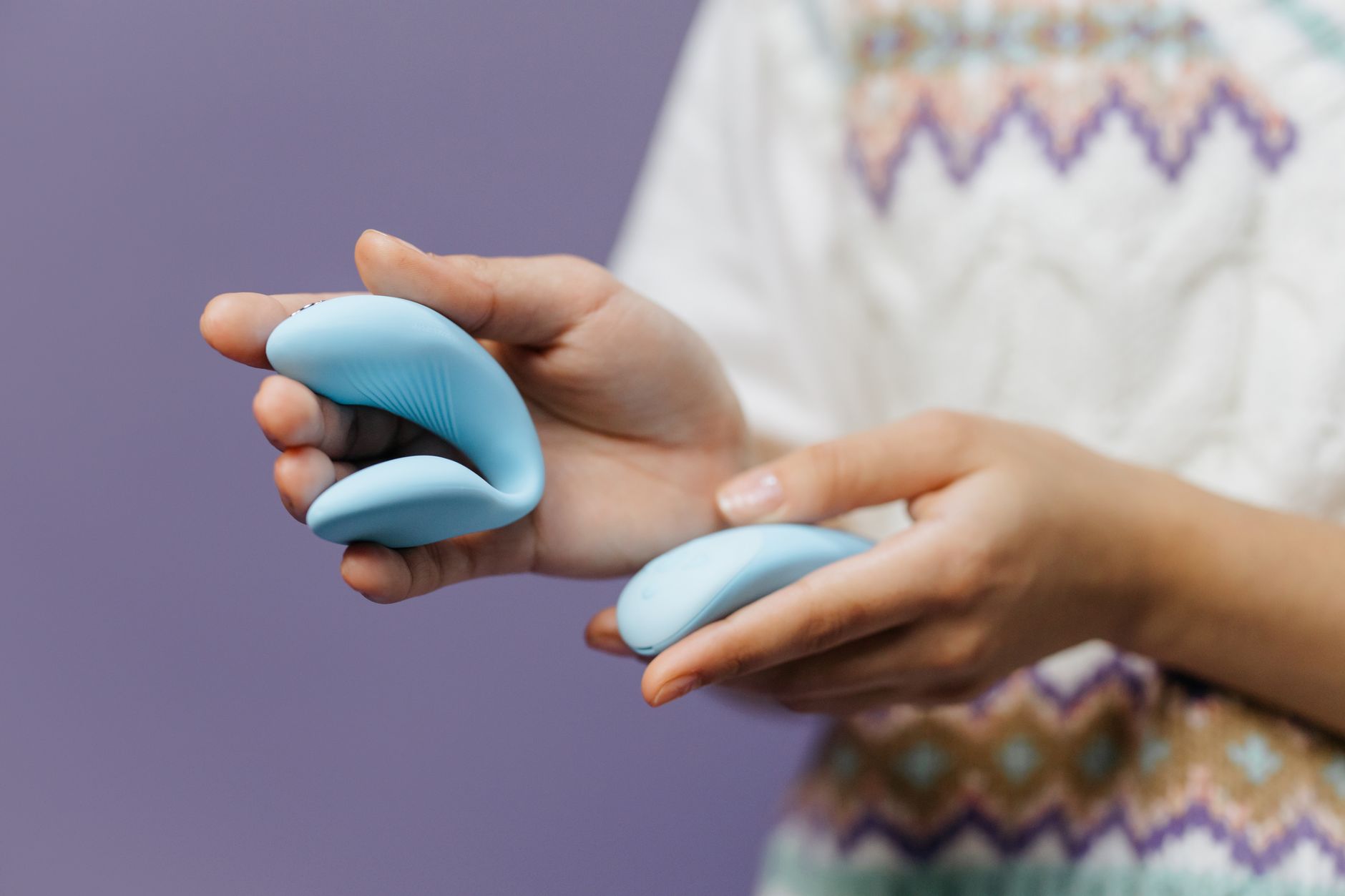
Photo by cottonbro studio on Pexels
The application strategy that minimizes irritation
If you're still using lube but trying to reduce irritation, these practical shifts matter:
Apply lube to your body, not the toy. A small amount of lube on your fingertip, gently massaged into the vulva, gives you control over quantity and distribution. Applying it directly to the toy often means too much contact between lube and your skin.
Use less than you think you need. Most people overestimate how much lubrication actually helps. A dime-sized amount for clitoral play is often enough. More isn't more. it's just more irritation.
Warm it up first. Cold lube can shock the vulva and trigger irritation. Rub a small amount between your fingers for a few seconds before applying.
Reapply if sessions go longer than 20 minutes. Lube breaks down. If you're going for extended pleasure, a quick top-up halfway through prevents friction buildup and irritation.
Wash off immediately after. Don't sleep in lube or wear it under clothing for hours. Bacteria and yeast thrive in warm, moist environments. Clean your vulva with warm water and pat dry.
The partner conversation
If you're in a relationship, lube sensitivity can trigger resentment if it's not communicated clearly. Partners sometimes feel rejected ("she doesn't want me") when really you're reacting to a product. Others feel like they're doing something wrong.
The conversation that works. "My body reacts badly to most lubes. It's not about you or my desire. We have three options. one. we switch to a lube my skin actually tolerates. two. we spend more time on foreplay so I lubricate naturally. three. we use a toy designed for less lubrication, like an air-pulse vibrator. What feels right to you?"
This frames it as a problem you're solving together, not a wall between you.
When to see a doctor
If you've tried three different lube formulas and your vulva still burns or itches during or after use, something else might be happening. Vulvodynia, yeast sensitivity, bacterial imbalance, or even hormonal fluctuations can make lubrication feel irritating regardless of the formula.
A gynaecologist can run a simple swab to rule out infection and help you identify patterns. Sometimes the issue isn't the lube at all. it's that your microbiome needs rebalancing or your natural lubrication is being suppressed by medication or stress.
The pleasure upgrade you deserve
Lube sensitivity is one of the most fixable pleasure problems. It requires patience and some experimentation. but once you find what works. the difference is enormous. You go from bracing yourself during intimacy to actually looking forward to it.
Whether that means switching lube formulas, extending foreplay, trying an air-pulse lemon vibrator, or all three. the goal is the same. your body deserves to feel good, and irritation isn't a permanent state. It's a signal that something needs to change. Listen to it.
People also ask
Why does water-based lubricant irritate my vulva?
Water-based lubes often contain glycerin, which some people metabolize differently and can trigger yeast infections or bacterial overgrowth. Others are sensitive to the preservatives or thickeners used in mainstream brands. If standard water-based lube irritates you, try hypoallergenic formulas without glycerin, or switch to silicone-based or oil-based alternatives if they fit your lifestyle.
Can I use a lemon clitoral vibrator without any lubrication?
It depends on the vibrator's design. Traditional vibrators with a firm tip benefit from lubrication to reduce friction. Air-pulse lemon vibrators, however, are designed to work with minimal or no additional lubrication because they use suction and air-pulse rather than direct vibration. If you're lube-sensitive, an air-pulse clitoral vibrator might eliminate the need for lube entirely.
Is coconut oil safe to use as lubricant with sex toys?
Coconut oil feels natural and works well for many people, but it damages silicone toys and can break down latex condoms. Only use it with glass, metal, or non-silicone toys in a monogamous, fluid-bonded relationship where condoms aren't needed. If you're using silicone lemon sexual toys, stick to water-based or silicone-based commercial lubes designed for toy compatibility.
How long does lube sensitivity last after I switch products?
If the irritation was from the lube itself, it usually resolves within 24.48 hours of stopping use. Your vulva is highly reactive and heals quickly. If irritation persists beyond 48 hours, the problem might not be the lube. See a doctor to rule out infection or other underlying causes.
What's the difference between air-pulse and traditional lemon vibrators for sensitivity?
Traditional lemon vibrators rely on consistent contact and friction between the toy and your body, which requires lubrication to prevent discomfort. Air-pulse lemon vibrators (like the Lem) use suction and pulsing air currents instead of direct vibration, meaning they stimulate without the same friction dependency. If you have lube sensitivity, an air-pulse design often eliminates the problem without sacrificing sensation.
Can stress or hormones make lubrication feel irritating even if the lube is fine?
Absolutely. Stress suppresses natural lubrication and makes your body more reactive to external products. Hormonal fluctuations, especially in the luteal phase of your cycle, can also shift your sensitivity baseline. If irritation appears suddenly without a product change, check your stress levels, sleep, and where you are in your cycle before assuming the lube is the culprit.