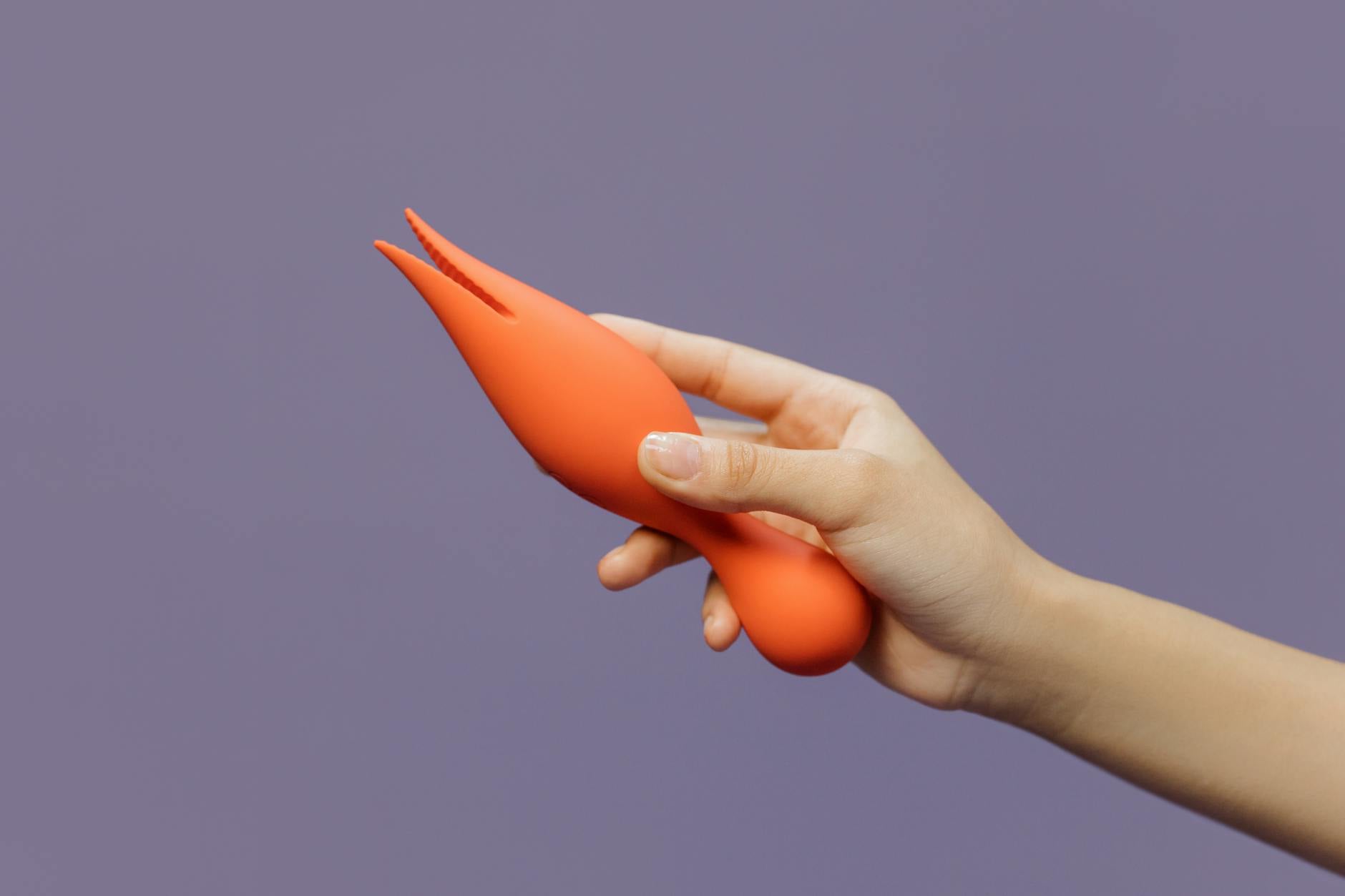
Here's what actually happens when you try to talk about toys
You bring it up. Your partner gets quiet. Maybe they say "I'm enough for you" or "that's weird" or they just change the subject. The conversation ends. You feel ashamed for asking. They feel attacked for saying no. Both of you feel stuck.
This isn't about the toy. This is about what the toy means to them. And that meaning is almost never what you think it is.
Why the conversation usually fails
Most people (even if they've never used a toy themselves) unconsciously treat vibrators as a referendum on their partner's performance. "If she wants that, it means my touch isn't enough." "If he suggests that, it means I'm not satisfying him." The toy becomes a symbol of failure instead of a tool for shared pleasure.
Add shame into the mix (which most of us inherited about sex, bodies, and asking for things), and suddenly a conversation about a lemon clitoral vibrator becomes a minefield where both of you are walking around detecting threats that aren't actually there.
Here's what I tell couples in my practice: your partner's defensiveness isn't about the vibrator. It's about their fear that you're unhappy, unattracted, or leaving. That's what you need to address first.
The reframe that changes everything
Instead of "I want to use a vibrator," the conversation is actually "I want us to explore what feels good to me, and I want you there with me." That's wildly different.
The first one says "I want something you're not." The second says "I want to deepen what we already have." One triggers defensiveness. The other invites curiosity.
When you're planning this conversation, do it outside the bedroom. Not during sex, not as a suggestion mid-intimacy, and definitely not when either of you is already frustrated. Sit down when you have time and you're both calm. This signals that it's important and worth real conversation, not a spur-of-the-moment request.
How to open the conversation without triggering shame
Start with something that's true about them, not about what you're missing. "I've been thinking about how much I enjoy when we try new things together." Or "I trust you enough to be honest about what my body responds to." You're leading with appreciation and trust, not with a complaint.
Then name what you actually want, specifically. "I've been curious about what it would feel like to use a lemon vibrator during sex with you." Not "I need a vibrator because you can't get me there." The specificity matters because it makes the conversation real instead of theoretical.
Here's the thing: your partner might still say no. They might need time. They might have deeper stuff to work through about shame or control or their own body image. That's real, and it's not your job to force them past it. But you also don't have to carry their "no" as gospel.
What to say when they get defensive
If they say "that's weird" or "I thought I was enough," resist the urge to argue or reassure them out of their feeling. Instead, name what you're actually hearing.
"It sounds like you're worried that I'm not satisfied with you. That's not true. I'm satisfied with you. I'm also curious about my own body and what my nervous system responds to. Those aren't the same thing."
You're not fighting their defensiveness. You're translating it. You're saying "I see what you're afraid of, and here's the truth underneath what you heard."
If they stay stuck, you might need to bring in help. A therapist or sex counselor (yes, those exist, and they're not weird) can help you both have the conversation without the shame and defensiveness getting in the way. That's actually what they're trained for.
The compromise that isn't really a compromise
Some partners soften if you frame the vibrator as something you do solo first, just to figure out what you like. "I want to explore this on my own so I know exactly what I enjoy. Then maybe we can share it." That removes the performance pressure from them in the first conversation.
You're not asking them to perform differently. You're asking for permission to know yourself better. That's a much lower threat level for someone who's already scared.
Use it solo. Figure out what patterns feel good, what speeds, what positioning. Get comfortable with the sensation. Then if and when the conversation comes up again, you can say "I loved this because of X, Y, Z. I think we could enjoy it together because..." Now you're leading with data, not desperation.
Why lemon vibrators specifically change the dynamic
Clitoral suction vibrators like Lem work differently than traditional vibrators. They don't rely on fast, intense buzzing. Instead, they use gentle pulsing suction that mimics a more natural rhythm. That distinction matters psychologically.
When you describe it to your partner, you can say "It's not like a traditional vibrator. It's gentler, more like a massage." That's true, and it also reduces the "weird sex toy" mental imagery they might have. It sounds more intimate, less mechanical. Some partners are way more curious about that version than what they imagine when you say vibrator.
The conversation after they say yes
If your partner agrees to try it together, don't overload them with expectations. The first time might feel awkward. You might laugh. You might both feel self-conscious. That's normal.
Start with them watching or touching while you explore it solo. Then ask if they want to try it on you. Build up gradually. The goal isn't a specific outcome. The goal is that you both feel safe experimenting together.
After, talk about it. "What felt good to you?" "What was weird?" "Do you want to try it again?" You're building a new conversation pattern that's based on curiosity, not defense.
What if they never come around
Look, some partners won't. They have their own stuff, their own history, their own fears that have nothing to do with you. You can't fix that by being smaller, quieter, or less honest about your desires.
If this is important to you, you get to use a lemon clitoral vibrator. Solo, if that's what it takes. Your pleasure matters even if your partner isn't comfortable participating. That's not rejection of them. That's care for yourself.
And here's the secret: sometimes when you stop asking permission and just take care of your own pleasure, your partner gets curious. They see you being confident and honest, and something shifts. They realize you're not leaving them. You're deepening your relationship with your own body, which actually makes you more present with them, not less.
But that can't be your strategy. Your strategy has to be "I deserve to feel good," not "I'm doing this to change their mind." The change happens as a side effect, not as the goal.
When communication rebuilds everything
This isn't really about the toy. It's about whether you can ask for what you want and be met with curiosity instead of defensiveness. It's about whether your partner believes you when you say you're satisfied and just want to explore more. It's about trust.
If you can't have this conversation, you probably can't have a lot of other conversations either. That's the real issue to address. And once you do, the vibrator conversation becomes easy because the trust is already there.
People also ask
How do I introduce a lemon vibrator to my partner if they've never used toys before?
Start with curiosity instead of pressure. "I read about these and I'm curious what they feel like. Would you be open to exploring that together?" Emphasize the sensory experience (gentle suction, specific patterns) rather than the fact that it's a toy. Let them handle it, see that it's not intimidating, and ask what they think before making any bigger ask. Sometimes demystifying the object removes the shame.
What if my partner says vibrators aren't natural or make them uncomfortable?
That's actually a statement about their relationship with technology, pleasure, or vulnerability. You might ask "What specifically makes you uncomfortable? Is it the idea of something mechanical, or is it about how my body might respond?" Those are different issues requiring different conversations. One is about the tool. One is about your autonomy. Naming the actual concern helps you respond to what they're really saying instead of arguing in circles.
Can using a lemon clitoral vibrator actually improve my sex life if my partner is resistant?
Yes, but maybe not in the way you think. When you stop waiting for permission to know your own body and your own pleasure, you become more confident and present during sex. You know what you like. You can guide your partner. You're not performative. That confidence is wildly attractive to most partners, and sometimes it softens their resistance over time. Your pleasure improves your sex life. Their comfort catches up later.
How do I talk about lemon vibrators without making my partner feel inadequate?
Frame it as addition, not replacement. "I love what we do together. I'm also curious about what else my body can experience. This is for me, not instead of you." Be specific about what you want from them (presence, curiosity, participation) separate from what you want from the tool. Those are different invitations, and keeping them separate prevents the tool from becoming a symbol of what's missing.
Is it okay to use a vibrator with my partner if they don't want to participate directly?
Completely. Lots of partners enjoy watching, touching around the vibrator, or being inside you while you use it. The participation doesn't have to look one specific way. What matters is that everyone involved is saying yes to what's actually happening, not what they think should be happening. Solo use is also fine if your partner isn't interested yet.
What should I do if my partner finds my lemon vibrator and gets upset?
Don't apologize for your pleasure. You can acknowledge their surprise ("I know this wasn't something we discussed") without backing away from the fact that you deserve to feel good. This is actually a gift because now the conversation is forced and you get to have it directly instead of avoiding it. Approach it as "I want us to talk about this because it matters to me" rather than "I need your permission to feel okay about myself."
Where to go from here
If you're stuck in a communication pattern where talking about sex or pleasure feels impossible, that's the place to start. Not the toy. The conversation. A therapist who specializes in couples communication or a sex counselor can help you both learn to talk about desire without triggering defensiveness. That skill applies to everything, not just toys.
Your pleasure matters. Your partner's comfort matters. And both of those can be true at the same time. When you believe that deeply enough, the conversation becomes something you're having together instead of something you're doing to them. That's the shift that changes everything.