Let's start with what changes
Arousal used to be fast. You'd think about something, or someone would touch you, and your body would respond almost immediately. Then somewhere in your late 30s, 40s, or beyond, that quickness starts to shift. It's not that arousal disappeared. It's that it takes a different amount of time to arrive.
This is not a disorder. This is completely normal physiology. Your nervous system has literally rewired itself as you've aged, and that rewiring actually creates space for a different kind of pleasure.
Here's what I see in my practice: people panic about the slowness and assume it means something is broken. They're not broken. They're just working on a different timeline. And that's where tools like lemon vibrators become genuinely useful. Not because they'll artificially speed you up, but because they're designed to work with the kind of steady, deliberate stimulation that slower arousal actually responds to.
Why arousal slows down as you age
Three physiological shifts are happening at once.
First, hormonal changes. Even if you're not in menopause, testosterone naturally declines with age in everyone, regardless of sex. Testosterone is one of the main drivers of spontaneous arousal. When it's lower, your body doesn't send out those random "I want you" signals as often. Instead, arousal becomes more responsive. You need actual stimulation or genuine connection to get going.
Second, your nervous system has literally changed. Younger bodies are wired for faster activation. As we age, that activation pathway gets longer. It's not slower because something is wrong. It's slower because your body has developed more regulatory capacity. You're less reactive overall, which is actually a feature, not a bug.
Third, blood flow patterns shift slightly. The clitoris takes a little longer to engorge. Vaginal tissue is more sensitive to dryness. The pelvic floor may hold tension differently. None of this stops pleasure. It just means the approach needs to match the reality.
What doesn't change (and this matters)
Your capacity for arousal is still there. Your ability to orgasm is still there. Your desire for pleasure and connection hasn't vanished. What's shifted is the speed at which these things activate. That's genuinely different from loss of capacity.
Most people I work with tell me that when they stop fighting the slower timeline and actually work with it, they discover something unexpected: the plateau phase of arousal lasts longer. You stay in a state of building pleasure for 15, 20, 25 minutes instead of rushing through it in three. Many people report that once they stop being frustrated about the slowness, that extended plateau becomes their favorite part.
How lemon vibrators fit into a longer arousal curve
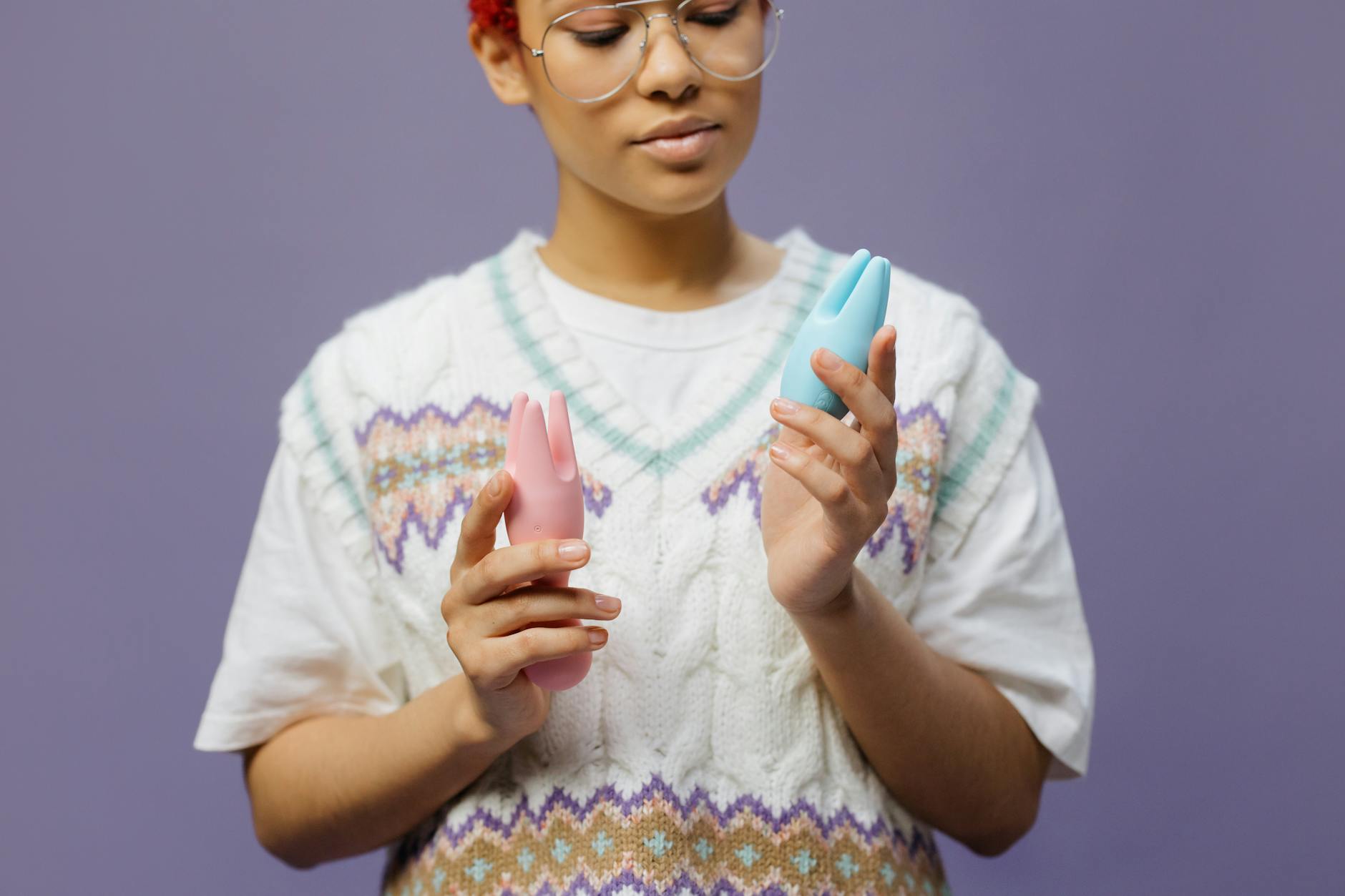
Air-pulse clitoral vibrators like the Lem are actually perfectly suited to slower arousal because of how they stimulate.
Traditional vibrators use high-frequency oscillation. They're designed to create rapid nerve firing. If your arousal is slow to build, a traditional vibrator can feel like you're pushing against a system that isn't ready. You use it, nothing much happens, and then you get discouraged.
Lemon clitoral vibrators use a different mechanism. They create a gentle suction and pulse that stimulates the clitoris without the jarring intensity of traditional vibration. This works beautifully for slower arousal because it gives your body time to respond. You can stay with a single pattern at a lower intensity for 10, 15, 20 minutes, and your arousal gradually builds. There's no rush. There's no pressure to respond quickly.
Many people using the Lem report that they find a rhythm where they can almost meditate into pleasure. The steady pulse becomes something you're moving toward rather than something you're struggling against.
The practical framework for longer warm-up time
Here's how to structure a solo session when arousal takes time.
Minutes 0-5: Mental arrival. Turn off your phone. Choose a space that feels good. Maybe dim the lights. Maybe add a blanket. Don't jump straight to the toy. Let your nervous system know this is intentional time. Your brain needs a few minutes to shift gears.
Minutes 5-10: Exploration without the toy. Touch your body the way you'd like to be touched. This isn't about racing to the finish. It's about noticing what feels good right now, in this body, at this age. Maybe you like light stroking. Maybe you prefer pressure. Your own hands are your best teacher.
Minutes 10-25: Introduce the vibrator at low intensity. Start with pattern 1 or 2 on the Lem. Let yourself sit with this for 5 to 10 minutes without trying to come. The goal isn't orgasm yet. The goal is arousal. Notice what your body is doing. Is your breathing changing? Is there more blood flow to your clitoris? Can you feel the pleasure building?
Minutes 25+: Shift intensity only if arousal is climbing. If you feel genuinely aroused, not just going through the motions, then you can move to a higher pattern. If you're still in the slow-build phase, stay where you are. Patience here changes everything.
Why patience is the actual tool
I've worked with so many people who were convinced their arousal was broken because it didn't look like the movies. Then they gave themselves real time, and the whole experience shifted.
Lemon vibrators help because they don't demand intensity. They invite you to stay with whatever is happening. And when you give your body 20 or 30 minutes instead of five, arousal doesn't feel slow anymore. It feels generous. It feels like your nervous system is finally getting what it needs, which is time and attention.
The shift is mental as much as physical. You have to genuinely let go of the idea that fast equals good. Slower arousal isn't a compromise. It's a different experience altogether.
What to avoid
Don't use high-intensity patterns hoping to force faster arousal. This usually backfires. High intensity on a clitoral vibrator when you're not properly aroused yet often feels overwhelming or numb.
Don't set a time limit. If you tell yourself "I have 10 minutes," your nervous system stays in performance mode. Your arousal won't build. Give yourself at least 20 to 30 minutes for solo time, more if you can.
Don't assume dryness means something is wrong. As we age, more lubrication helps regardless of how aroused you feel. Water-based lubricant isn't a sign of dysfunction. It's just part of the setup now.
Don't rush from the warm-up to full stimulation. The transition zone matters. Many people miss their best orgasms because they skip the middle.
When to get additional support
If arousal is taking longer but still arriving, you're fine. This is normal aging.
If arousal has completely plateaued and hasn't changed in three to six months despite trying different approaches, talk to a doctor. Sometimes there's an underlying hormonal shift or medication effect worth addressing.
If slower arousal is connected to relationship friction (your partner is impatient, or you're feeling pressure), that's a conversation worth having separately from the physical experience. Often people blame their body when the real issue is emotional safety. A therapist who specializes in couples work can help untangle that.
FAQ
How long is normal for arousal to take as you get older?
Anywhere from 15 to 40 minutes is completely normal. There's no right answer. Some people find their sweet spot is 20 minutes every time. Others vary based on stress, sleep, and how connected they feel to their partner. The key is that it's consistent for you.
Will using a lemon vibrator speed up my arousal if I use it regularly?
Not exactly. What happens is your body learns to trust the stimulation. You'll likely notice that arousal arrives more reliably over time, even if it still takes 20 minutes. You're also training your nervous system to recognize pleasure cues. That's valuable, but it's not the same as getting faster.
Is slower arousal a sign I'm losing interest in my partner or sex?
Not necessarily. Many people report that slower arousal happens across the board, whether they're solo or with a partner. It's often a pure physiology shift, not an emotional one. That said, if you've also lost interest in your relationship, that's a separate conversation worth having. They might overlap, but they're not always connected.
Can I use a lemon clitoral vibrator if my arousal is slow and I also have vaginal dryness?
Yes, absolutely. In fact, it's a good pairing. Use water-based lubricant on your vulva and on the vibrator. The suction mechanism of air-pulse lemon vibrators doesn't rely on friction the way traditional vibrators do, so they're gentler on sensitive or dry tissue. Start with lower intensity and let yourself have plenty of warm-up time.
My partner wants sex but my arousal is slow. How do I explain this without making them feel rejected?
You might try something like: "My arousal is slower now. That's not about you. I want to spend more time on foreplay, and I might need about 20 minutes before I feel ready. Can we make that part of our routine together?" Framing it as a timeline shift rather than a rejection often helps partners understand. If your partner remains impatient or dismissive, that's a relationship dynamic worth exploring with a therapist.
Does slower arousal mean I'll have slower orgasms too?
Not always. Many people find that the long build-up actually leads to more intense orgasms. The plateau phase is where a lot of the sensation work happens. So you might spend 25 minutes getting aroused and then have a quicker, more powerful orgasm than you would have had if you'd rushed through the warm-up.
The bigger picture
Arousal taking longer as you age isn't a problem. It's information. Your body is telling you it needs more time, more intention, more care. When you stop fighting that and instead structure your pleasure around it, everything changes.
Lemon clitoral vibrators are particularly good at this because they're designed for steady, patient stimulation. They don't push you. They invite you to stay with what's happening. And when you have a tool that matches your body's timeline instead of fighting it, pleasure becomes less about performance and more about actual feeling.
That's the shift that matters.
Ready to explore this?
If you're curious about how a different type of clitoral vibrator might work for your body and your timeline, we're here to help. Reach out with questions, concerns, or just to talk through what might be the right fit for you. Get in touch.
Sources
Masters, W.H., Johnson, V.E. (1966). Human Sexual Response. Little, Brown.
Barlow, D.H. (1986). "Causes of sexual dysfunction: The role of anxiety and cognitive interference." Journal of Consulting and Clinical Psychology, 54(2), 140-148.
Guay, A.T. (2001). "Female sexual desire disorders and hypogonadism: Epidemiology, biology, diagnosis, treatment." Endocrine Practice, 7(5), 350-362.
Davis, S.R., Davison, S.L., Donath, S., Marino, J.L. (2005). "Circulating androgen levels and self-reported sexual function in women." JAMA, 294(1), 91-96.