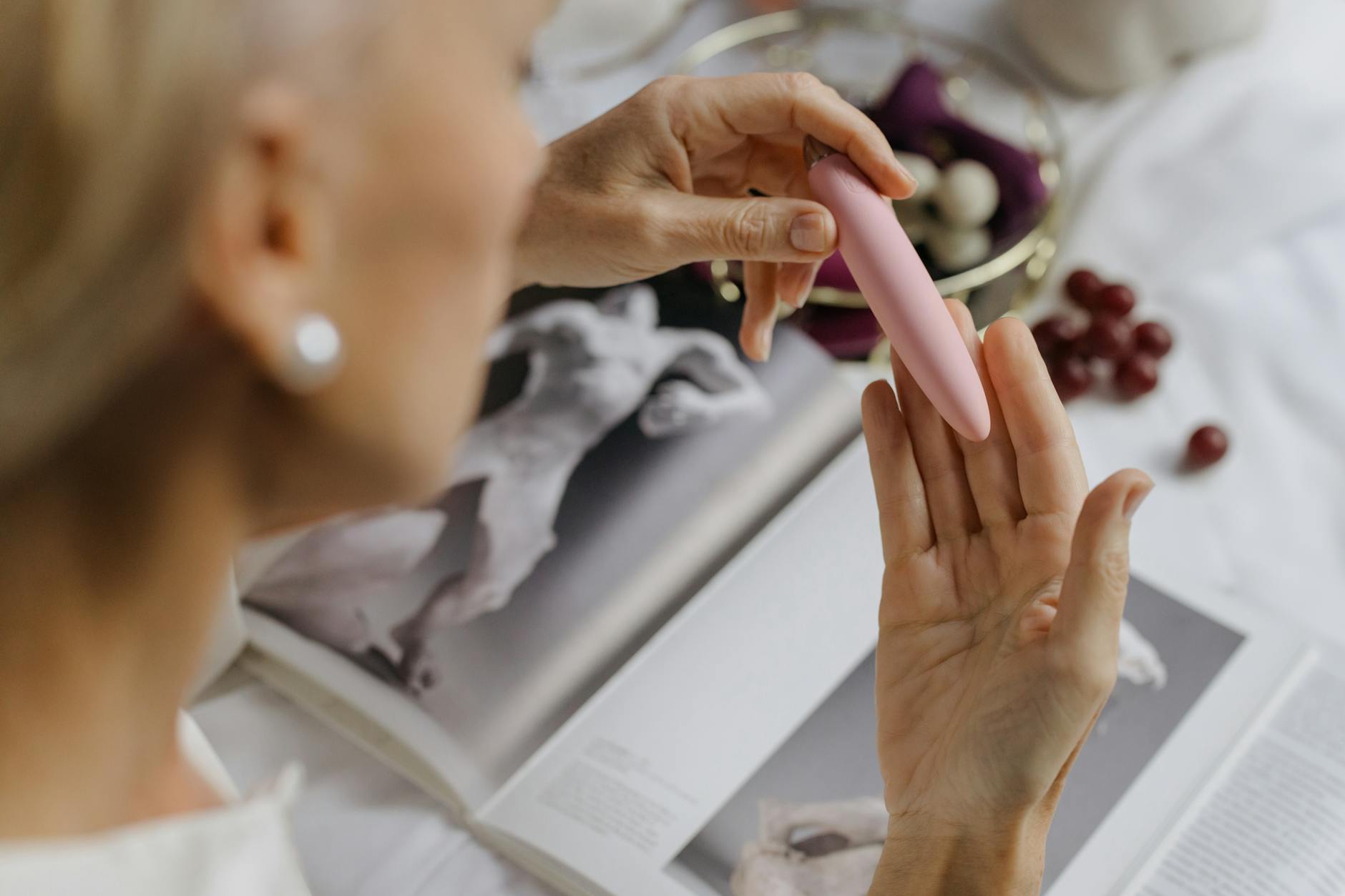
Here's what nobody tells you about warm-up time
If your clitoris takes 20 minutes or longer to really respond, you're not broken. You're not lazy. You're also not rare. The neurological architecture of arousal differs wildly between bodies, and some nervous systems genuinely need a slower build than others. The problem isn't your body. It's usually the tool, the expectation, or both.
Most traditional vibrators are designed for immediate, high-intensity stimulation. They assume you're already primed. If you're not, they feel like a dentist's drill instead of pleasure. A lemon clitoral vibrator, by contrast, works differently. It uses air-pulse technology that mimics a gentler sensation pattern, which can actually align better with slower arousal.
Why your clitoris takes time to respond
Three physiological reasons matter here.
First, blood flow. Arousal is literally about blood rushing to your clitoris. This doesn't happen instantly in everyone. Some bodies have a longer warm-up phase where the vasocongestion is building beneath the surface, but you feel nothing yet. It's like warming an oven. The element is on, but the kitchen doesn't feel hot until you open the door.
Second, nerve sensitivity. Your clitoris has 8,000 nerve endings concentrated in a small area. But those nerves don't activate all at once. They light up in layers. Early stimulation might feel mildly pleasant or even neutral. After 15-25 minutes, the same touch feels electric. This is not a sign you're numb. It's a sign your nervous system is still recruiting nerve fibers.
Third, your central nervous system state. Arousal requires your brain to shift from alert mode to relaxed mode. If you're carrying stress, distraction, or even just the day's cognitive load, your nervous system stays defended. You can feel this as a kind of disconnect between what's happening and what you feel. This is especially true for people who've been socialized to monitor, adjust, and manage pleasure instead of just experiencing it.

Photo by Madison Inouye on Pexels
How a lemon vibrator changes the warm-up equation
Unlike traditional vibrators that rely on rapid oscillation, a lemon sucker uses suction and pulsing rhythms that feel closer to oral sex. This matters for slow-arousal bodies because suction doesn't demand an immediate response. It builds sensation gradually. You can stay on the same setting for 15 minutes without it becoming uncomfortable or overstimulating. It's like the difference between a knock on the door and someone gently calling your name through the wall. The signal reaches you, but the intensity doesn't assault you.
The air-pulse technology in a clitoral vibrator like the Lem also means you can use lower intensity settings early on without losing the sensation entirely. Most traditional vibrators have a cliff between "barely noticeable" and "too much." A lemon vibrator has a slope. You can dial into exactly the right pressure for that slow burn phase.
The strategic warm-up protocol
If you know your clitoris needs 20-30 minutes to fully engage, build that into your approach instead of fighting it.
Start five minutes before you think you're ready. Begin stimulation when you're still in the "thinking about pleasure" phase, not the "feeling it fully" phase. Use the Lem on pattern 1 or 2, which are the gentlest options. You're not trying to create sensation yet. You're inviting your nervous system to start paying attention.
Stay on that low setting for 10-12 minutes. This feels counterintuitive when nothing much is happening. But this is the moment when blood flow is building, nerve fibers are waking up, and your brain is shifting gears. Don't interpret the lack of immediate intensity as a sign it's not working. It is working. You just can't feel it yet.
Then, and only then, increase intensity. After that 10-12 minute foundation, try pattern 3 or 4. This is when your body is primed enough that increased intensity feels delicious instead of jarring. Many people find that the switch from low to medium at this point feels like flipping a switch. That's not magic. That's your nervous system finally caught up.
Expect the real pleasure surge around minute 20-25. This is roughly when most slow-arousal bodies hit a tipping point. Sensation becomes more vivid, your body's response feels more obvious, and the stimulation becomes genuinely pleasurable rather than just neutral.
What not to do
Don't start on a high setting hoping to "jumpstart" yourself. This almost always backfires. High intensity on an unaroused clitoris creates a numb, overstimulated feeling that makes it harder for your nervous system to downshift into pleasure mode later. You've locked the door instead of unlocked it.
Don't interpret slow warm-up as a personal failing or a sign that you need to rush yourself. The cultural narrative around sex assumes instant desire. That's a narrative, not a fact. Your body's timeline is the correct one for your body.
Don't use the first 10 minutes to check your phone or half-focus. You need gentle attention, not intense focus, but you do need your brain in the room. That means creating an environment where you can actually think about the sensation without other demands interrupting. Even quiet presence helps.
The partner dimension
If you're with a partner and you have a slow warm-up, communication prevents resentment. Let them know: "I need about 20 minutes before I start feeling this deeply. That doesn't mean something's wrong. It means I need a slower ramp." Most partners respond well to clear information. What feels like rejection is often just misalignment about what stage you're in.
You might also invite them into the early warm-up phase differently. Instead of penetration or intense stimulation, ask for touch, kissing, or conversation. Use a lemon vibrator as your tool while they provide other kinds of stimulation. This creates a collaborative warm-up rather than a pressure situation.
When slow warm-up signals something else
If your warm-up time has suddenly increased, or if you're not warming up at all anymore, check three things: hormones, medication, and stress. A shift in birth control, a new antidepressant, or a major life stressor can all extend arousal time or flatten it entirely. That's not a toy problem. It's a body signal. See a doctor if the shift feels significant.
Also consider whether you're actually safe. Nervous systems that won't relax often have good reasons. Sometimes slow warm-up is about friction in the relationship, unprocessed tension, or a partner dynamic that doesn't feel secure. A lemon vibrator helps with the physiological piece, but it won't fix an unsafe dynamic.
Why timing matters more than you think
One of the biggest mistakes I see is people giving up on pleasure because they interpret their slow warm-up as a personal defect. You'll read posts about how lemon vibrators help when pelvic floor tension blocks orgasm or strategies for using lemon vibrators when you have a sensitive clitoris, and you might think your situation is the opposite: your clitoris feels numb or unresponsive. But slow warm-up and numbness are different problems with different solutions.
Slow warm-up is predictable. You will get there. You just need 20-30 minutes and the right tool. Numbness feels random and unreachable. If you're actually experiencing numbness, that's worth investigating with a doctor. But if you're just slow to warm up, you already have everything you need. You just need to reframe the timeline.
FAQ
Why does my clitoris take so long to respond to any stimulation?
Arrousal involves blood flow, nerve activation, and nervous system downregulation. These happen on different timelines in different bodies. Some people have a naturally longer warm-up phase where everything is building beneath the surface even though you don't feel it yet. This is completely normal. Stress, distraction, hormonal shifts, and relationship dynamics can all extend the timeline too. If you've had a sudden change in warm-up time, check in with a doctor. If it's always been this way, you're just wired for a slower burn.
Is using a lemon vibrator during warm-up the same as using one once I'm already aroused?
No. During warm-up, you want lower intensities and longer duration on each setting. Once you're aroused, you might move through patterns more quickly or prefer higher intensities. A lemon clitoral vibrator's strength is that it lets you do both without the jump being jarring. The pattern 1-2 range works beautifully for the 15-20 minute slow build. Patterns 3-4 work for the pleasure phase after that.
Can a lemon vibrator actually speed up my warm-up time, or just make it more pleasant?
Mainly the latter. A quality lemon sucker tool like the Lem can make slow warm-up feel less frustrating and more intentional. But it can't reprogram your nervous system to warm up faster. What it does do is work with your timeline instead of against it. That's huge. Once you stop fighting your body and start using the right tool for your pace, the warm-up phase often feels shorter because you're actually enjoying it instead of waiting through it.
What if I never warm up, even after 30 minutes?
That's worth investigating. Numbness or complete lack of arousal after 25-30 minutes suggests something beyond timeline differences. This could be hormonal, medication-related, stress-based, or relationship-based. See a doctor to rule out physiological causes. If those check out, work with a therapist on the stress or relationship piece. A vibrator helps when your body can respond. It can't create response where there's a deeper block.
Should I feel guilty about needing so much time to warm up?
Absolutely not. You're not slow. You're not broken. You're not defective. You're just wired the way you're wired. The cultural narrative assumes instant desire, but that narrative is wrong for a huge percentage of people. Your body's timeline is perfect for your body. The only thing worth adjusting is your expectation and your tool choice.
Can stress or anxiety actually make warm-up time longer?
Yes, significantly. When your nervous system is in alert mode, blood flow to your genitals decreases. Your brain stays in planning mode instead of pleasure mode. This can extend warm-up from 20 minutes to 45 minutes or longer. If stress is new for you, this might be temporary. Breathing work, a change in environment, or reducing the stimulation that feels like pressure can help. If stress is chronic, you might need longer with warm-up and support processing what's underneath the stress.
The bottom line
Slow warm-up is not a flaw. It's information about how your nervous system is wired. Once you work with that wiring instead of against it, pleasure becomes available. A lemon vibrator, with its gentler air-pulse technology and variable intensity, aligns beautifully with slower arousal timelines. You don't need to rush yourself. You need to plan for your actual timeline, use the right tool, and give your body the time it genuinely needs.
Your pleasure matters, and it's worth the 25 minutes it takes to reach it. If you're navigating this and want support thinking through what's underneath a longer warm-up, reach out to talk through your specific situation.